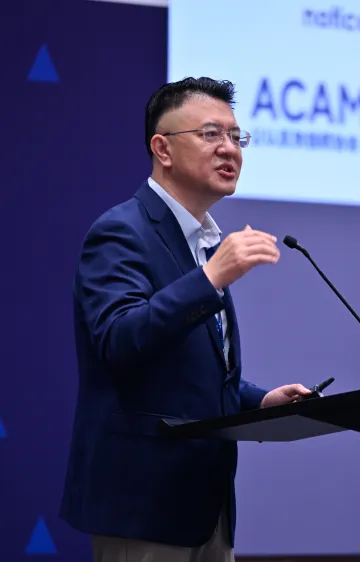


Troy La Huis: From cost center to trust center in financial crime compliance


Fifteen years ago, Troy La Huis and his team with consulting firm Crowe were helping a bank in the U.S. Southeast work through a massive backlog of transaction monitoring alerts. They noticed odd patterns in the data. While nothing looked like a textbook fraud scheme or an obvious money laundering case, they still thought the activity was important enough for the bank to document and report to the Financial Crimes Enforcement Network.
Their instinct was right. Months later, they learned that their efforts played a critical role in helping the FBI uncover a human trafficking ring operating coast-to-coast across the U.S.
That experience drove home to La Huis and his team that anti-financial crime (AFC) work is always about much more than compliance, even if that sometimes feels it is the day-to-day focus. Beyond the alerts and filings are real people, many of whom are vulnerable, exploited or in grave danger. It is also La Huis’s view that greater recognition of the human consequences of financial crime1 is helping reinforce a shift already underway in financial crime compliance and prevention. This shift is one that influences how financial institutions (FIs) understand risk, define success and think about the expanded role these teams can play in adding value.
An unexpected pivot to an “electrifying” career path
La Huis says he “fell backward” into his career of helping organizations design and implement crime prevention programs. He joined Crowe in 2004, expecting to help clients set up customer relationship management (CRM) systems. Instead, he was one of the initial members of what is now Crowe’s Financial Crime Prevention team.
This unexpected pivot to the anti-money laundering (AML) and banking space was not as random as it first appeared to La Huis. Before he joined the firm, a Crowe team working on a CRM project at a prominent Washington, D.C., bank, realized the same capabilities they were implementing could support the institution’s response to a new regulatory requirement. “We essentially used that CRM foundation to build the first know your customer (KYC)2 program in the country,” says La Huis.
Crowe’s work here placed the team close to a case involving foreign heads of state, and some of the most high-profile financial crime issues of the moment. “We were at the center of everything when it comes to financial crime and anti-money laundering,” says La Huis. “It was electrifying. Many of us were hooked from the word ‘go.’”
Recognizing the interconnectedness of fraud, money laundering and cybercrime
While La Huis was immediately captivated by the pace and intrigue of AML and AFC work, he was also struck by the interconnectivity of criminal activity. He was drawn to the way risks, behaviors and warning signs overlapped. Financial crime, he came to realize, is not a set of separate issues for siloed teams to manage in parallel, but a web of connected activity that demands an integrated response, and a broader view of risk across the institution.
“It’s all one blurred ecosystem,” he says, explaining that fraud generates illicit proceeds that must be laundered, while cyberattacks create access, money or data that often move through the same networks. The activity does not break neatly into separate categories, which is why institutions cannot afford to structure responses as if it does. “From a protection standpoint, we can’t have boundaries, either,” La Huis says. “We need to look at where we can interconnect everything as much as possible, including the fraud, AML and cybersecurity functions.”
La Huis acknowledges that internal barriers and legacy structures can still undermine communication and coordination in many organizations. But technology, including tools like artificial intelligence (AI), is helping teams share information more effectively and identify links among activities, actors and events more clearly.
As that activity comes into focus, so does the scale of modern financial crime. Even local or regional institutions may find that suspicious activity in their own network connects to bad actors elsewhere in the country—or around the world. “Everything is global in financial services today,” La Huis says. “And now, with digital banking, you don’t always know who or what you’re dealing with. But lately it seems, it’s much bigger, more sophisticated and more far-reaching than you may realize.”
The need to “crawl, walk, run” with AI adoption
As financial crime compliance and prevention work becomes more connected and technology-enabled, La Huis believes the bigger adjustment for teams is not simply learning how to use new tools. It is adapting to the new ways of working that can help FIs see risk more clearly and respond to it more effectively. That shift can feel personal for many professionals who have spent years building expertise around familiar alert types, recurring workflows and manual processes that may be frustrating at times but are at least understood.
La Huis does not romanticize that status quo. “A majority of the operational work being done in the space today is the result of false positives,” he says. Even if the future promises less monotony and deeper, more meaningful work, change can still be highly disruptive. “People are being told, instead of being an expert on structuring or velocity of wire transfers, you’re now going to be looking at broader networks and schemes. You’re going to focus on behavioral analysis on top of the data analysis that you already have to do,” La Huis explains. “While I’m someone who would say, ‘Sign me up! When can I start?’ others may find that change uncomfortable.”
The dual challenge for FIs, he says, is helping teams understand that digital transformation and modernization efforts, including AI implementation, are good for them and then helping people “retool for the future.” And while La Huis is bullish on what AI tools3 can do to advance the work of AFC teams, he argues for a measured approach—“crawl, walk, run”—when it comes to adoption.
Some institutions, he says, “just throw AI out there,” and employees respond by doing nothing because they do not know how to use it, or they worry that using it well could risk their job security. This is why La Huis keeps returning to anxiety as a top barrier to AI progress. Leaders, he says, have to help people “separate their identity from what they do today and help them form a new identity of what they can do in the future.” Otherwise, “AI anxiety creates resistance and that resistance then stifles change.”
For all the promise of AI in banking,4 La Huis underscores that technology does not replace the importance of human judgment, especially in disciplines such as financial crime compliance and prevention. “There’s something to be said for institutional and experiential knowledge,” he says. “That’s what makes me comfortable that we’re not going to just flat out replace people over the next five years as AI adoption accelerates.”
A time for boldness and courageous leadership
If institutions are to be successful at transforming their financial crime compliance and prevention programs, leaders need to rethink what success looks like. For years, La Huis says, many outside our industry have defined “good” in financial crime compliance too narrowly. “To them, good has meant meeting regulatory compliance requirements. That is the measure. That’s the bar,” he says.
That mindset is understandable. Boards want to see the institution stay clear of trouble, and executives are focused on reducing the risk of fines. But La Huis believes that definition of success is no longer enough. Compliance remains essential, of course, especially in an environment where regulatory requirements are evolving. But he says it is even more important now to consider how financial crime compliance programs contribute beyond that baseline. “Among other things, another measure of ‘good’ is how well you’re serving your communities in terms of preventing financial crime and reducing the impact of criminals,” he says.
With better intelligence,5 more connected data, more context6 and tools that can surface patterns and relationships in new ways, these teams can contribute more broadly across the institution; not only by detecting and preventing crime more effectively, but by generating insights that support stronger decisions elsewhere in the business. La Huis sees this not as mission drift, but as an important evolution.
The opportunity that financial crime compliance and prevention teams have to provide even more value has La Huis excited about the future. “I think over the next five years, we’re going to see a wave of positive change in this industry and more change than I’ve seen in my career over the past 22 years,” he says. “Financial crime is growing and becoming more sophisticated. Now is the time for technology companies, consulting firms, and institutions to work more collectively to get better at beating criminals and addressing the human side7 of financial crime.”
La Huis adds that realizing this future requires leaders who can articulate a vision, bring people with them and help their organizations see their compliance and risk management departments as trust-centered, value-adding functions with a larger role to play. “The future is ours to shape, especially regulatory pressure shifts and gives teams more freedom to work differently,” he says. “We just have to reach out and grab the opportunity—and courageous leadership is key to that transformation.”
Chris Bagnall, CAMS-FCI, CFE, 
- “What Is Financial Crime & How Do You Prevent It?” Quantexa, https://www.quantexa.com/resources/financial-crime/
- “KYC in Banking and Finance,” Quantexa, https://www.quantexa.com/resources/understanding-kyc-in-banking-and-finance/
- “Where human expertise meets the speed and scale of agentic AI,” Quantexa, https://www.quantexa.com/platform/ai-innovation/
- "The State of AI in Financial Services," Quantexa, https://www.quantexa.com/resources/ai-financial-services/
- Dan Higgins, "What is Decision Intelligence?" Quantexa, September 29, 2025, https://www.quantexa.com/resources/what-is-decision-intelligence-guide/
- Mathew Long, "Why Data Readiness and Context Are Shaping the Present and Future of AML," Quantexa, https://www.quantexa.com/blog/why-data-readiness-and-context-are-shaping-the-present-and-future-of-aml/?searchTerm=context&page=1
"The Human Side of AML Blog Series," Quantexa, https://www.quantexa.com/collections/the-human-side-of-aml/
AFC Trends & Typologies: Examining the U.S. Administration’s Priorities
Human trafficking: The dangers of sports events
Collective Intelligence: Moving Beyond Data Silos
How comprehensive blockchain innovation improves economies
Charitable and volunteer organizations in the U.K. and Ukraine
Collective Intelligence: Moving Beyond Data Silos
Human trafficking: The dangers of sports events
Human trafficking and the 2026 World Cup: Demanding a unified response
Collective Intelligence: Moving Beyond Data Silos
When Anyone Can Be Anyone: AI and the Identity Crisis in Finance
Collective Intelligence: Moving Beyond Data Silos
Address poisoning attacks: Exploiting blockchain and cognitive vulnerabilities
When Anyone Can Be Anyone: AI and the Identity Crisis in Finance
Collective Intelligence: Moving Beyond Data Silos
Human trafficking: The dangers of sports events
Collective Intelligence: Moving Beyond Data Silos
Human trafficking: The dangers of sports events
Address poisoning attacks: Exploiting blockchain and cognitive vulnerabilities
Collective Intelligence: Moving Beyond Data Silos
Human trafficking: The dangers of sports events