AMLA 'Already' Shortlisting Institutions for Direct Supervision

The EU's Anti-Money Laundering Authority has "already" started the process of selecting 40 systemically important banks and other financial services companies for direct supervision from January 2028 onwards, a senior executive with the agency said Tuesday.
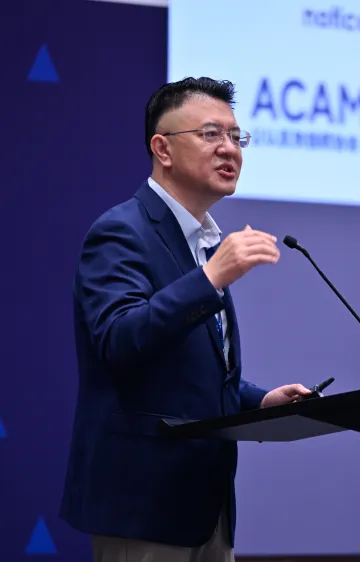
At an inaugural conference in Frankfurt, Germany, their agency's home since launching in July of last year, AMLA officials met with national authorities, compliance officers and representatives of other EU-level offices to discuss their plans for direct oversight, ensuring compliance with bloc-wide AML rules and facilitating the flow of financial intelligence.
"The selection process [for direct supervision] is already underway—this is not a project for the future," Rikke-Louise Petersen, an executive board member who leads engagement with financial services industry, told attendees of the conference on Tuesday morning. "We all need to realize that we will have to get ready to because it will go rather quickly."
High-risk banks, money services business and other financial services companies that operate in at least six of the EU's 27 nations would qualify for direct supervision by AMLA, but only if their enterprise-wide operations constitute a "material part" of their business.
AMLA began collecting details on financial crime-related risks from thousands of such companies prior to officially selecting 40 of them for direct supervision, and will commence a more targeted data-gathering exercise during the process.
"It's worth mentioning that being on this list [of 40 institutions] reflects systemic importance and cross-border reach," said Petersen. "It's not a sign of weakness ... our aim with direct supervision is safer, stronger and more consistent [oversight]."
The all-day conference at Alte Oper, a historic concert hall in Frankfurt's banking district, doubled as an opening ceremony of sorts for AMLA, which, along with harmonizing regulations and enforcement across the EU, has made fostering a community of anti-financial crime authorities and professionals within it a priority.
Speakers at the conference repeatedly framed the need to strengthen the bloc's AML regime as a security issue and an essential component of "strategic autonomy."
"The context AMLA faces today is very different from when the [European] Commission proposed its establishment in 2021," EU finance chief Maria Luis Albuquerque told attendees Tuesday. "Foreign actors have become more active in seeking to exploit and weaponize vulnerabilities in our financial system."
Other speakers highlighted technology's role as both a facilitator of financial crimes and bulwark against them.
"Money laundering and terrorist financing risks are evolving and increasing ... mainly driven by two forces: geopolitics and technology," AMLA chair Bruna Szego said in her keynote speech. "In addition, new technologies are reshaping the criminal economy—they are enabling more scalable, more anonymous and more cross-border forms of financial crime."
Szego sounded a familiar refrain Tuesday in stressing AMLA's intention of leveraging artificial intelligence and other new technologies to analyze financial crime-related trends, identify new threats and close the gap with criminals.
"Achieving this [genuinely EU-wide AML framework] depends on three interdependent results that AMLA is working towards: a deeper understanding of risks and technology, more consistent supervision and better financial intelligence," Szego said.
AMLA currently employs 160 personnel, but aims to reach a headcount of 232 by the end of this year and 432 by December 2027 before direct supervision begins.
Brian McKenzie, head of AML for Europe at Citibank in Ireland, said in a panel at the conference that his institution would welcome direct oversight from AMLA, insisting that his preference for such a scenario did not amount to "turkeys voting for Christmas."
"What you want is that a single point of contact, consistent requests for information, [and] transparent and mature dialogue," said McKenzie. "Once you have a harmonized set of requirements—whether it's a higher bar or perceived to be so—it's much easier ... to operationalize controls and to get efficiencies."
Contact Koos Couvée at kcouvee@acams.org
- 主题: 反洗钱/反恐怖主义融资
- 源: European Union
- Document Date: 六月 9, 2026